- HeraSphere
- Posts
- HeraSphere #31: Decode Your Migraine
HeraSphere #31: Decode Your Migraine
From hormonal triggers to genetic testing and next-gen blockers — the migraine toolkit most women don't know exists.

Lilly Liu Minkove
March 15, 2026
Hi friends,
This past Tuesday I was out walking with two friends, both migraine sufferers. Listening to them describe what they manage — and what they've been told, or not told, by their doctors — I kept thinking: there has to be more to this story.
TBH, I've never had a migraine, but I've watched friends power through them, cancel plans because of them, and quietly reorganize their lives around them for years.
What I found surprised me. Migraine isn't a bad headache. It's a neurological diagnosis with its own biology, its own subtypes, and for many women, deep hormonal roots. Most people are treating the symptom. Very few have been helped to understand the actual condition.
This one's for Stacy and Tracy…and for everyone who's been handed a prescription and sent home without answers.
The TL;DR
About 1 in 7 people have migraines — and women are nearly 3x more likely than men to suffer from them.
Most people treat a migraine like a very bad headache and reach for ibuprofen. That is the wrong tool for the wrong problem.
Migraine is a neurological diagnosis with distinct biology, multiple expressions (some don't involve head pain at all), and causes that differ by person.
For many women, the root cause is hormonal. But that is not a reason to eschew HRT - there are ways to manage dosage and format.
And for women with a subtype called migraine with aura, this pattern is a recognized cardiovascular risk marker your doctor needs to know about.
Unexplained bouts of vertigo could be vestibular migraine, which disproportionately affects women in their 40s.
Migraine vs. Headache — More Different Than You Think
Migraines are a complex neurological event with four stages. The first is the prodrome — a warning phase that can start 24 to 48 hours before pain arrives. Yawning, neck stiffness, mood shifts, food cravings, increased sensitivity to light. Most people don't recognize this phase if they’re not aware. Then comes the aura, then the headache, then the postdrome — the foggy, exhausted day after the pain clears, sometimes called the migraine hangover. You can move through all four stages or just some of them. Most people only recognize the middle part.
About 1 in 3 migraineurs experience aura. This is a temporary neurological disturbance — visual shimmer, zigzag lines, blind spots, tingling, or suddenly losing words mid-sentence. A measurable electrical wave moves across the outer layer of the brain, temporarily disrupting normal activity. It lasts anywhere from 20 minutes to an hour. The headache often follows.
Migraine has subtypes that matter in treatment. Migraine with aura, without aura (the most common), chronic migraine (15 or more headache days per month), hormonal migraine, silent migraine (aura with no headache), and vestibular migraine. Each has different treatment implications. The same drug doesn't work for everyone because these aren't the same condition.
The subtype that gets most consistently missed is vestibular migraine. It shows up as vertigo, spinning, dizziness, or balance problems — with no headache. It's the most common neurological cause of vertigo in adults, disproportionately affects women in their 40s, and roughly 64% of attacks involve no head pain at all. Many women spend years in ENT offices being treated for inner ear disorders they don't have. If you or someone you know has been told they have "unexplained vertigo," ask a neurologist specifically about vestibular migraine.
What's Actually Happening in Your Brain
Migraine is fundamentally a vascular event, meaning it involves your blood vessels. During an attack, blood vessels surrounding the brain expand, pressing against the meninges — the tough membrane lining between the brain and skull, which is densely packed with pain receptors. That pressure, pulsing with every heartbeat, causes the throbbing.
CGRP is the volume knob on your brain's pain system. CGRP (calcitonin gene-related peptide) floods the area during an attack and amplifies everything — pain, light sensitivity, sound sensitivity. It's the primary reason a migraine feels categorically different from a regular headache, and it's the target of the newest generation of migraine drugs.
Before the pain, there's a wave. A slow electrical disruption called cortical spreading depression (CSD) rolls back-to-front across the surface of the brain — like a blackout moving across a city grid. It temporarily suppresses activity, generates aura in people who experience it, and triggers the CGRP cascade that causes the pain.
Light makes it worse for a biological reason. Specific retinal neurons respond to brightness and feed directly back into the pain signal. Photophobia during a migraine is fuel on the fire. Moving to dim, warm-toned light at the first sign of an attack can interrupt part of this cascade. Overhead fluorescent lighting is actively amplifying the pain.
The migraine brain has an energy problem. Brain imaging studies consistently show abnormalities in mitochondrial energy production — specifically decreased ATP levels between attacks. Mitochondria are the power plants inside every cell; in brain neurons, they generate the ATP (adenosine triphosphate) that keeps electrical signaling stable and controlled. The migraine brain appears to run with both increased energy demand and decreased supply — a chronically underpowered system that's more vulnerable to the triggers that set off an attack. This is why fasting, poor sleep, and blood sugar crashes are such reliable migraine triggers. It also explains why riboflavin (B2) and CoQ10 — both mitochondrial cofactors that support ATP production — show up consistently in migraine prevention research.
Migraines tend to worsen over time without proper treatment. Every attack activates the trigeminal pain pathway — the nerve highway running from the brainstem up through the face and scalp. Repeated activation over time lowers the threshold for the next attack. Eventually some people develop allodynia, where ordinary sensations — wearing a ponytail, taking a shower — become genuinely painful during an attack. This is why treating migraine are so essential vs. just waiting attacks out.
The Hormonal Connection — Why This Is a Women's Health Issue
Estrogen receptors are expressed throughout the brain and its pain circuitry. The gender gap in migraine appears at puberty and narrows after menopause. Women have roughly 18% migraine prevalence; men, 6%.
The trigger is the fall in estrogen, not low estrogen itself. When levels drop quickly after a priming period, the migraine threshold drops with them. Attacks cluster around menstruation, the pill-free week on oral contraceptives, and the first days postpartum — all moments of rapid estrogen withdrawal. This is why managing the stability of estrogen matters as much as the level.
Perimenopause is peak migraine territory for many women. Estrogen oscillates wildly and roughly 30% of women see frequency and severity peak during perimenopause. Attacks get longer, harder to treat, and more likely to include aura for the first time. Migraines that got significantly worse in your 40s are not a coincidence.
Menopause doesn't guarantee relief. For about half of women, it does improve. A 2025 population study of 4,825 women found 46% continued having attacks post-menopause, and 1 in 5 was still experiencing them after 60. Tracking your pattern across hormonal milestones is useful data — both for understanding your triggers and for having an informed conversation with your doctor.
Migraine with aura is a cardiovascular risk marker. Women with this subtype have roughly double the risk of ischemic stroke — a clot blocking blood flow to the brain — compared to women without migraine. The same vascular instability that generates the aura appears to make the brain's blood vessels more vulnerable over time. Add other risk factors — smoking, high blood pressure, elevated cholesterol — and neurologists and cardiologists start paying close attention. A statin or low-dose aspirin prescribed to a migraine patient isn't treating the head pain. It's treating what the migraine pattern reveals about vascular risk. This is why "migraine with aura" needs to be in your chart explicitly — not just "migraines."
On HRT, delivery method is everything. Oral estrogen creates the same fluctuating blood levels that trigger attacks in the first place. Transdermal estrogen — patch, gel, or spray — delivers stable, steady levels through the skin without the peaks and valleys. For hormonally-driven migraines, transdermal at the lowest effective dose is the clinical consensus. Even women with migraine with aura, who are typically told they can't take combined oral contraceptives due to stroke risk, are generally considered safe candidates for transdermal HRT. Progestogen choice matters too: cyclical progestogen creates hormone fluctuations that can worsen attacks; continuous options like micronized progesterone or a levonorgestrel IUD minimize that. If migraines worsen after starting HRT, talk to your doctor about adjusting dose and delivery before stopping.
You're the Detective — Find Your Root Cause
Migraine causes are multifactorial. Gut health, hormonal fluctuation, nutrient deficiencies, sleep disruption, blood sugar instability — all documented drivers. No two people have the same combination. The goal is to find yours.
Some foods are suspects, not confirmed culprits. Tyramine (aged cheeses, red wine, chocolate), nitrates (deli meats), and histamines (fermented foods, leftovers) can trigger vascular expansion in susceptible people.
Gluten can trigger an immune response in sensitive people that inflames the gut lining; that inflammation signals through the nervous system and can lower the migraine threshold.
Sugar causes rapid glucose spikes followed by crashes, destabilizing the brain's energy supply — and a brain running low on stable fuel is more likely to misfire. Dairy, for some people, is both a histamine source and contains protein fragments that can disrupt neurotransmitter balance. None of these are universal. The key question is which foods may trigger migraines for you as an individual.
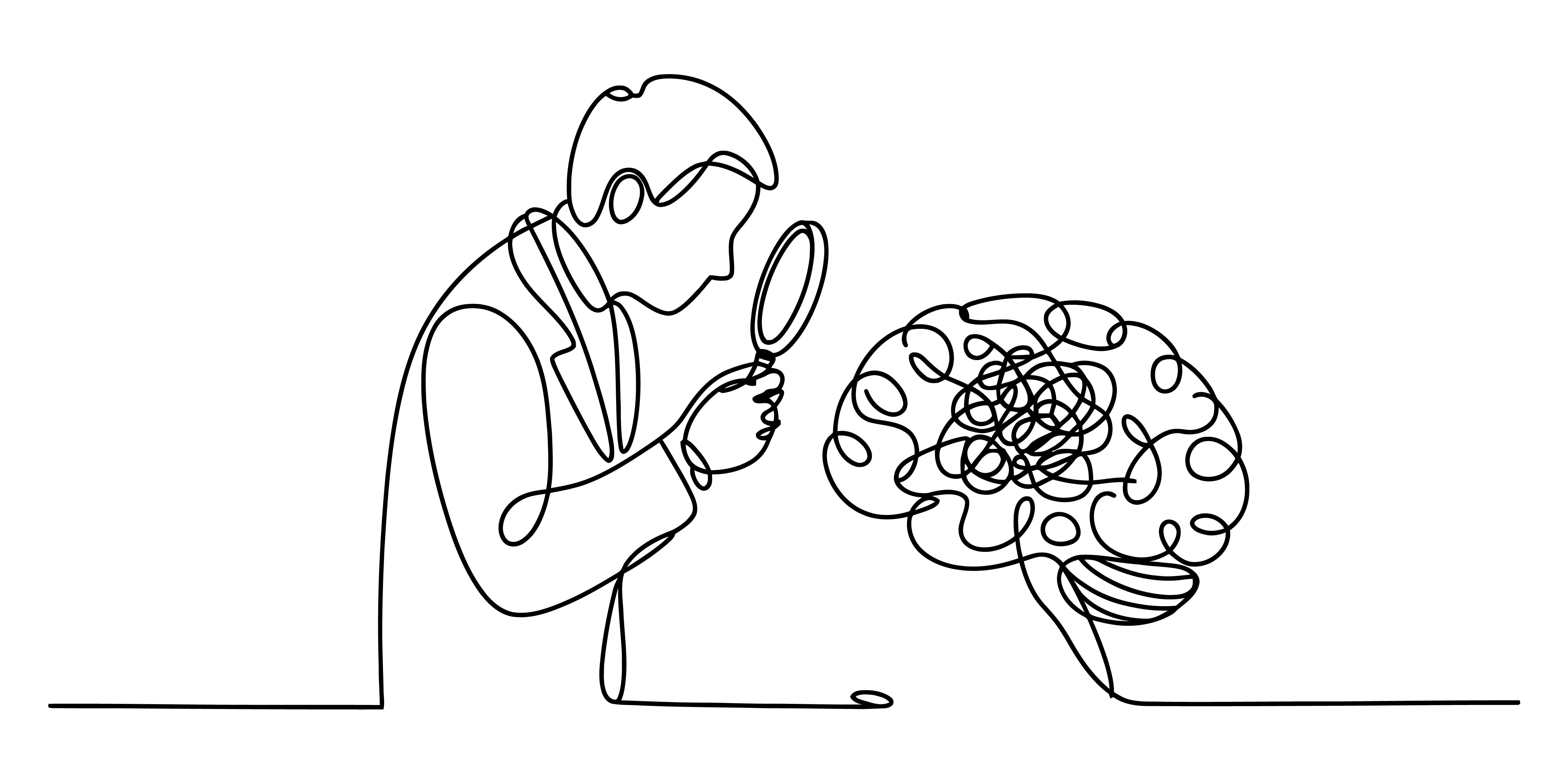
The migraine diary is your case file. Cycle day, sleep quality, food, stress, weather, alcohol, hydration — logged consistently for two months. Most people are surprised by what the pattern reveals. It also gives your doctor something concrete to work with instead of starting from scratch at every appointment.
Genetics can tell you which systems to investigate. Stanford-trained neurologist Dr. Amelia Scott Barrett has spent decades focused on why conventional migraine treatment fails so many people. Her approach uses genetic testing to identify which specific pathways — serotonin signaling, detoxification, inflammation, mitochondrial health — are most likely driving a person's attacks. Stop eliminating variables one at a time; go straight to your personal vulnerability profile. Her work is an emerging approach, still outside mainstream clinical practice, but worth exploring. Check out her free headache quiz — 10 questions that give you DNA-guided direction.
Magnesium glycinate and omega-3s have the strongest over-the-counter evidence. Magnesium deficiency is common in chronic migraineurs. Omega-3s daily have been shown to reduce both frequency and intensity. Both are worth a conversation with your doctor.
The Drug Toolkit — Drugstore to Prescription Pad
Understanding what each drug class actually does changes how you use them — and makes for a much more productive conversation with your doctor.
Excedrin Migraine combines aspirin, acetaminophen, and caffeine. The first two reduce pain and inflammation; caffeine constricts the dilated blood vessels and speeds absorption of the other two. Useful for mild-to-moderate attacks caught early. The catch: regular use can trigger rebound headaches through caffeine dependency. It addresses symptoms, not underlying neurology.
NSAIDs (ibuprofen, naproxen) reduce prostaglandins — inflammatory molecules that drive pain in the meninges during an attack. Good for mild attacks; work significantly better the earlier you take them.
Triptans (Imitrex, Maxalt, Zomig) were the first drug class designed specifically for migraine, introduced in the early 1990s. They bind to serotonin receptors — serotonin partly controls blood vessel tone — signaling dilated vessels to constrict while suppressing CGRP release. Effective for many people, but not recommended with cardiovascular disease due to the vessel-constricting effect, and they need to be taken early. Once an attack is fully underway, they often stop working.
Gepants (Ubrelvy, Nurtec) are the genuinely new generation. Where triptans work by constricting blood vessels, gepants block CGRP from attaching to its receptor before the pain cascade begins. Since there is no vasoconstriction involved, they are safe for people who can't take triptans due to heart or stroke risk. They can be taken during the prodrome, before head pain starts. Serena Williams has been Ubrelvy's spokesperson since 2020 because she's an actual patient.
Preventive medications shift the goal from treating individual attacks to reducing how often the brain fires. CGRP monoclonal antibodies (Aimovig, Ajovy, Emgality) are monthly or quarterly injections that keep CGRP suppressed as a baseline. Botox injections every 12 weeks work similarly — absorbed into the trigeminal nerve terminals, they block the release of CGRP and other inflammatory molecules, gradually raising the threshold so attacks fire less often. Both are for people with four or more attacks per month. Beta blockers and certain antidepressants are also established options in this category.
What struck me most doing this research: migraine biology is genuinely fascinating — and most people suffering from migraines have never been walked through it. Once you understand what's actually happening in your brain, the treatment decisions make so much more sense.
The fact that a migraine diary can reveal a pattern your doctor has never seen. That your hormonal history is data. That the drug your friend swears by works through a completely different mechanism than the one that works for you — because you may not have the same type of migraine at all.
Being an informed patient changes the conversation you can have with your doctor. And if this issue helped connect some dots — please forward it to a friend who's been quietly managing this alone. She'll want to know.
Know the biology to own your health,
Lilly
If you’ve received this email from a friend and want to receive it in your own inbox
Note: While I love diving deep into research and sharing what I've learned about women's health and wellness, I want to be crystal clear: I'm a passionate health advocate and researcher, not a medical professional. Think of me as your well-informed friend who does extensive homework – but not your doctor.
Everything I share in HeraSphere comes from careful research and personal experience, but it's meant to inform and inspire, not to diagnose or treat any medical conditions. Your body is uniquely yours, and what works for one person might not work for another. Always consult your healthcare provider before making significant changes to your diet, exercise routine, or wellness practices, especially if you have underlying health conditions or take medications.
ICYMI, here are a few past issues that you may enjoy:



Reply